SOLAR BLOG:
How Do I Know If My Solar Panels Are Working?
If you have solar panels on your home or business, you probably expect them to quietly do their job every day—turning sunlight into electricity and helping reduce what you purchase from the utility company. But how do you actually know if your solar panels are working properly?
The good news is that there are several simple ways to check.
1. Check Your Solar Monitoring App
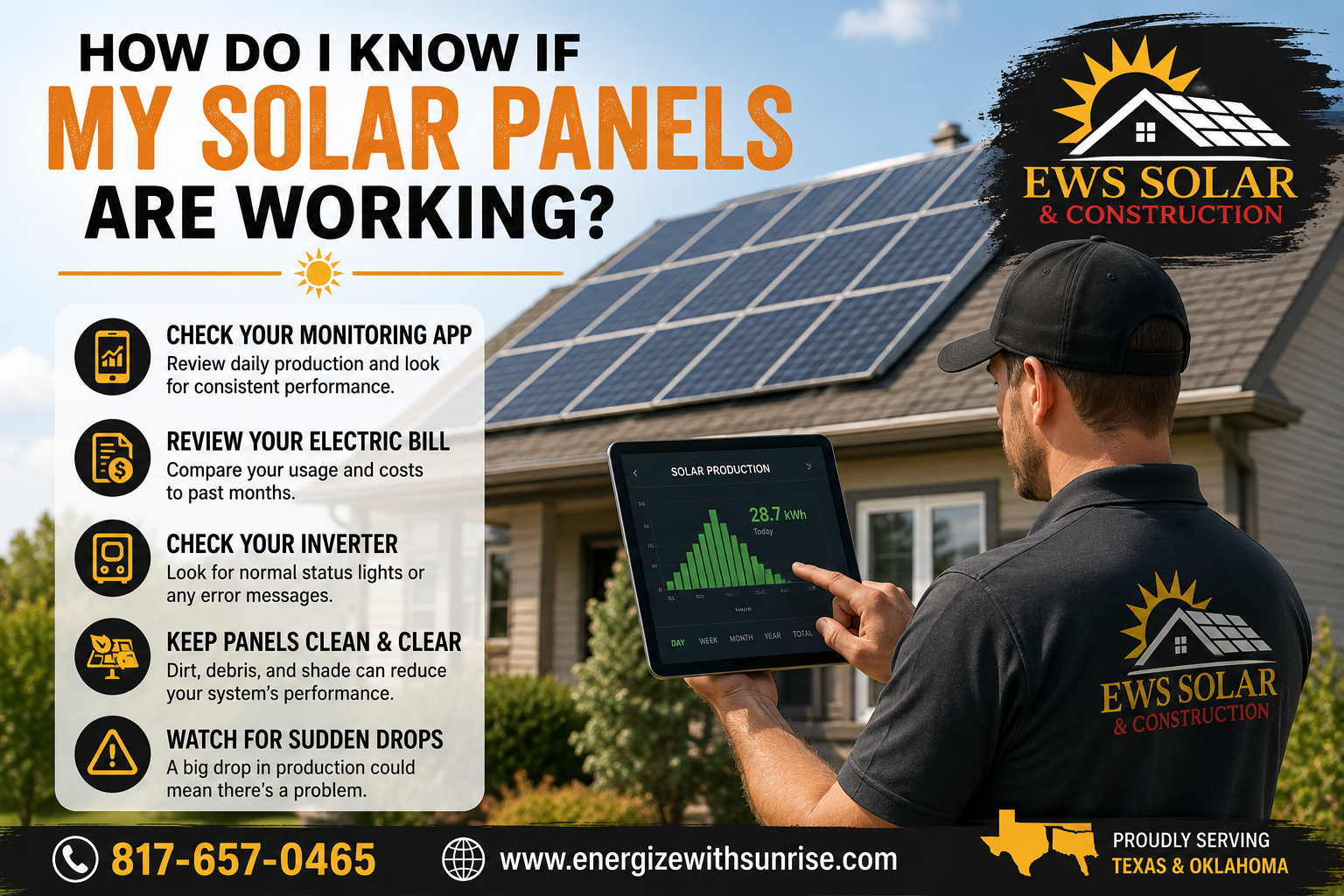
Most modern solar systems include an app or online monitoring portal that shows how much energy your system is producing.
On a sunny day, you should normally see production increase through the morning, peak around the middle of the day, and decrease as the sun goes down. Clouds, shade, weather, the season, and the orientation of your panels can all affect production, so don't expect the exact same numbers every day.
What you're looking for is consistency. If your system suddenly shows little or no production when conditions are good, something may need attention.
2. Look at Your Electric Bill
Your electric bill can also provide clues about how your solar system is performing. If your solar panels have historically kept your utility usage lower and you suddenly notice a significant increase, it's worth investigating.
Keep in mind that a higher bill doesn't automatically mean something is wrong with your solar. Extremely hot weather, increased air-conditioning use, adding a pool, an EV, new appliances, or simply using more electricity can increase your bill even when your solar system is operating correctly.
The important question is: Is your solar system producing what it should for its size and current conditions?
3. Check Your Inverter
Your inverter is one of the most important components of your solar system. It converts the DC electricity produced by your panels into AC electricity that your home or business can use.
Depending on the brand and model, your inverter may have indicator lights, a display, or an app that reports its operating status. Warning lights, fault codes, repeated shutdowns, or an inverter that appears completely inactive can indicate a problem.
If you're unsure what a warning or error code means, it's best to have a qualified solar technician check the system rather than attempting electrical repairs yourself.
4. Don't Forget About Dirty or Shaded Panels
Your system can technically be "working" while producing less energy than it should.
Dirt, dust, pollen, bird droppings, leaves, and other debris can reduce the amount of sunlight reaching your panels. New shade from growing trees or nearby construction can also affect production.
That's why it's a good idea to periodically inspect your system and compare its current production with previous months and years. A professional panel cleaning and system inspection can help identify problems that aren't obvious from the ground.
5. Watch for Sudden Drops in Production
One of the biggest warning signs is a noticeable and unexplained change.
For example, if your system normally produces well during sunny summer days and production suddenly drops dramatically, don't ignore it. The problem could involve an inverter, wiring, breakers, optimizers, microinverters, damaged panels, communication equipment, or another part of the system.
Catching a problem early can prevent months of lost solar production.
What If My Original Solar Company Is Gone?
This has become a common problem for solar owners. Your original installer may have gone out of business, stopped servicing your area, or simply stopped returning your calls.
That doesn't mean you're stuck with a solar system nobody can service.
EWS Solar & Construction can inspect, troubleshoot, service, repair, clean, and help maintain solar systems—even if we weren't the company that originally installed them.
With 25 years of experience in the solar industry, our goal is to help you understand what your system is doing and determine whether it's operating the way it should.
Not Sure If Your Solar Is Working Properly?
If something doesn't look right, your electric bills have increased, your monitoring app is showing an error, or you simply want someone to check your system, give us a call.
EWS Solar & Construction
📞
817-657-0465
🌐
www.energizewithsunrise.com
Solar installed by someone else? No problem. We service solar systems throughout Texas and Oklahoma.
Your solar system is an investment. Make sure it's working for you.
SOLAR VIDEOS